The Muteff Factor (formerly The Colbert Factor)Growing up in Muteff village in the Ijim hills of Boyo Division in Cameroon’s North West Region, we were often reminded that education was the one inheritance no one could ever take away. Families with little more than coffee farms and small food crops sacrificed everything to keep their children in school, believing that one day one of them would carry the hopes of the village far beyond its mist-covered hills.
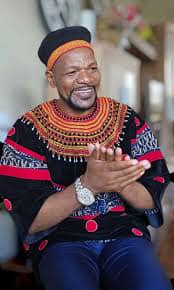
Those dreams were never in short supply. Children walking to and from school imagined themselves becoming doctors, teachers, engineers and even pilots, inspired simply by the sight of airplanes soaring high above the hills.Those dreams have found fresh expression in the remarkable journey of Dr Richard Munang.From Government School Jinkfuin in neighbouring Belo Subdivision to one of the highest academic leadership positions within the United Nations system, Dr Munang’s appointment as Director of the United Nations University Institute for Natural Resources in Africa (UNU-INRA) is more than a personal achievement. It is a reminder that African talent can shape global solutions.
The United Nations University has announced that the Cameroonian-born environmental scientist and policy leader will assume office on 14 September 2026 as Director of UNU-INRA, the UN’s flagship institute dedicated exclusively to natural resource governance across Africa.What makes his appointment especially remarkable is the record he brings to the role. Dr Munang developed the first Africa Adaptation Gap Report, a landmark assessment that transformed how Africa argues for climate finance by placing adaptation alongside emissions reduction as a global priority. He also established Africa’s first technical standards for affordable solar dryers, helping farmers reduce post-harvest losses and increase their incomes.His career has been marked by two historic breakthroughs.
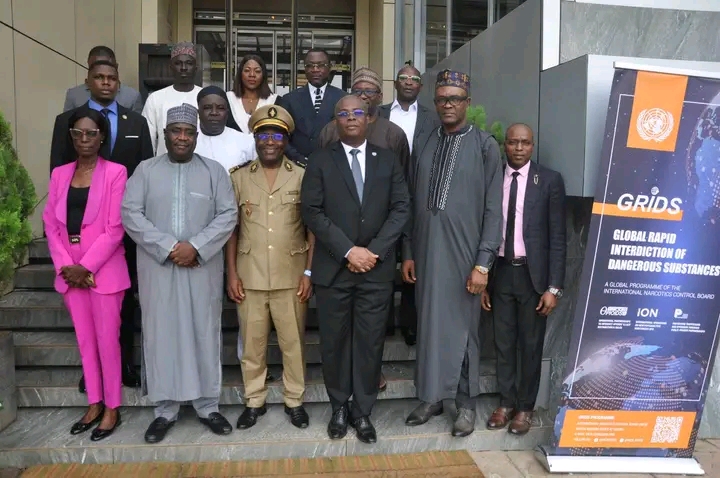
He became the first Black person to lead the Global Environment Monitoring Systems at the United Nations Environment Programme (UNEP), overseeing one of the world’s principal platforms for monitoring the health of the planet’s air, water and oceans. He later became the first Black person to head the Global Programme on Crimes that Affect the Environment at the United Nations Office on Drugs and Crime (UNODC), where scientific evidence and environmental damage assessments were successfully integrated into criminal prosecutions, helping courts impose stronger penalties for environmental crimes.
Together, these represent four global firsts that no previous leader has held simultaneously. This is Jinkfuin making history. This is Boyo making Cameroon proud.Welcoming the appointment, United Nations University Rector and UN Under-Secretary-General Professor Tshilidzi Marwala described Dr Munang as bringing « a rare mix of scholarship, programming and implementation, » saying his leadership would strengthen the University’s work across Africa and the Global South.For Cameroonians, however, the story began long before international recognition.Dr Munang attended Government School Jinkfuin before continuing to Baptist Comprehensive High School Njinikejem and Government Bilingual High School Bamenda.
He later studied Physics and Education at ENS Bambili of the then University of Yaoundé I.His academic excellence earned him a Chevening Scholarship to the University of Nottingham in the United Kingdom, where he completed a Master’s degree and later a PhD in Environmental Change and Policy. He subsequently served as a research fellow at Trinity College Dublin, Ireland.Since joining UNEP in 2009, Dr Munang has championed the idea that climate action should create jobs and improve livelihoods. He founded the Ecosystems-Based Adaptation for Food Security Assembly (EBAFOSA), bringing together governments, farmers, businesses and financial institutions to promote climate-smart agriculture and green enterprise across Africa.Through his Innovative Volunteerism initiative, millions of young Africans have turned environmental challenges into economic opportunities in renewable energy, sustainable agriculture, agro-processing and recycling
. He also pioneered climate entrepreneurship programmes in African universities and developed innovative financing models that help communities invest in climate resilience.A prolific scholar, Dr Munang has authored more than 100 publications on climate change, environmental governance and sustainable development. He also serves as Adjunct Research Professor at Western University in Canada and has been recognised among the world’s Top 50 Global Thought Leaders in Sustainability, alongside numerous other international honours.
Beyond academia and policy, he has also emerged as an inspiring motivational writer, using his regular reflections to encourage young Africans to pursue excellence, innovation and service.Established in 1986 and headquartered at the University of Ghana in Accra, UNU-INRA is the only institute within the United Nations University system devoted entirely to Africa’s natural resources. It supports all 54 African countries by translating scientific research into practical policies for the sustainable management of land, forests, minerals, fisheries, water and energy resources.Accepting his appointment, Dr Munang said: « This appointment belongs first to God, then to Cameroon and to Africa. It reflects many years of work with communities, governments, researchers and young people who are proving that evidence-based environmental action can change lives. At UNU-INRA, my focus is simple.
Africa’s natural resources must be governed with sound science, practical policies and solutions designed by Africans, for Africans, in ways the world can learn from. »For young people in Jinkfuin, across Boyo Division and throughout Cameroon, Dr Richard Munang’s story is a reminder that global leadership can emerge from ordinary classrooms in rural communities. His journey from Jinkfuin to the United Nations is proof that excellence, perseverance and service can carry African voices to the highest tables of global decision-making.More importantly, at a time when conflict continues to deprive thousands of children in Cameroon’s two English-speaking regions of their right to education, his story reaffirms an undeniable truth: education remains the surest path through which a child from the humblest beginnings can rise to change the world.